Gap assessment & remediation
Define what you should be ready for, measure your coverage against it, and generate the procedures you are missing.
Answering “Are we covered?”takes days
You don't know if you're ready
A new threat emerges, but nobody can quickly answer: “Are we covered?”
Response procedures are spread across different tools, formats and teams, making coverage difficult to assess.
Gap analysis becomes a manual process of gathering, reviewing, and mapping what exists and what is needed. It can take days, and by the time the picture is complete, parts of it may already be out of date.
Gap analysis in minutes,
not days
With Cymph, you get a live view of readiness and a prioritised list of what to fix first,
before an incident exposes the gap.
.png)
What Cymph does:
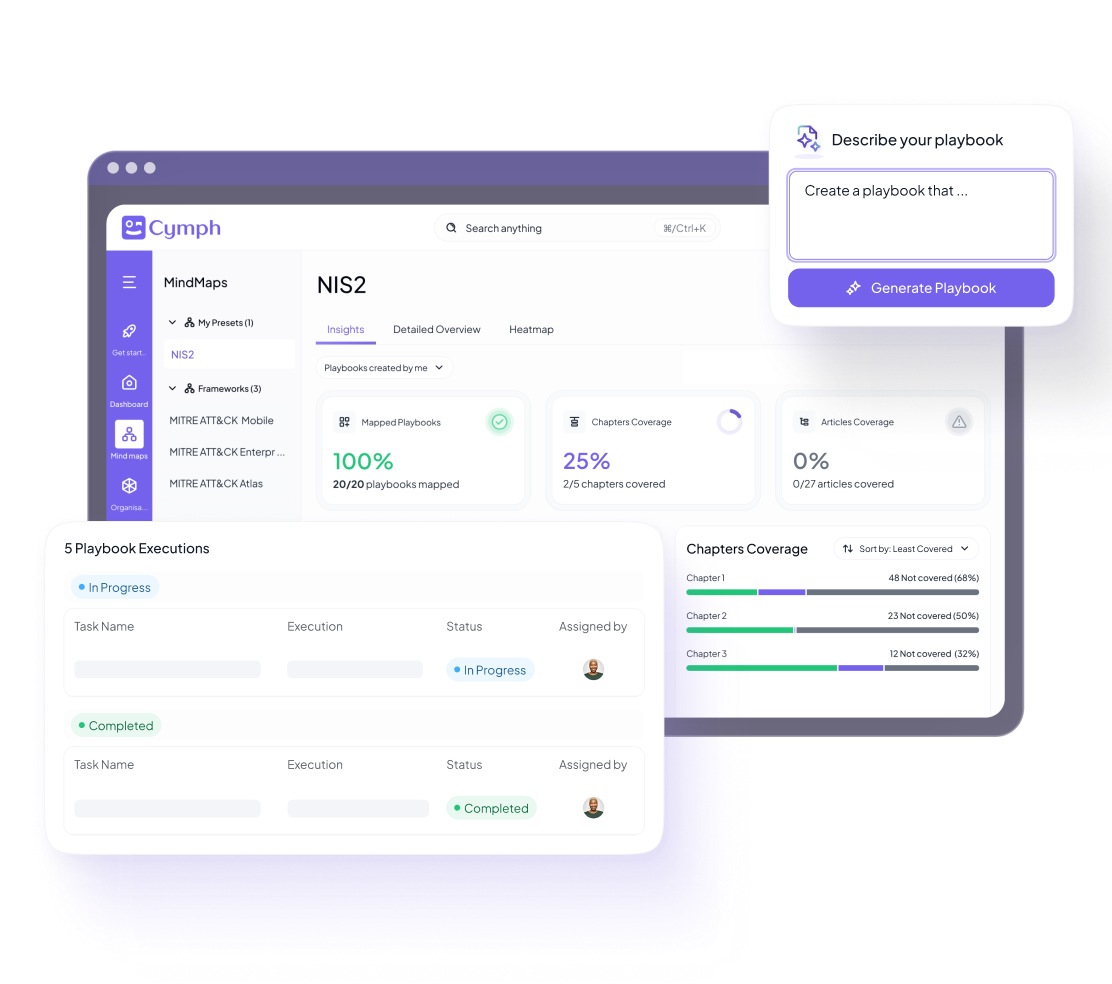
- Maps playbooks to frameworks like MITRE ATT&CK, ISO 27001, NIS2.
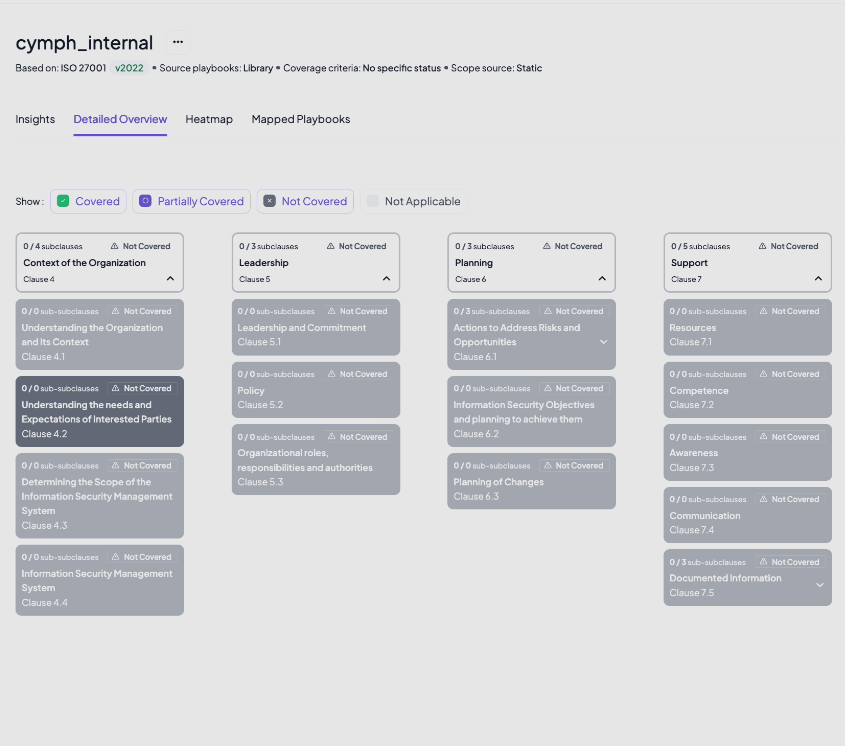
- Shows exactly where coverage is missing.
- Helps build the missing procedures with AI-drafted playbooks.
From manual assessments to continuous coverage
See where your response procedures provide coverage and where gaps remain as your environment changes. Cymph combines AI-assisted framework mapping, regular framework updates and draft procedures to help your team move from assessment to action.
| Before Cymph | With Cymph |
|---|---|
| Periodic, manual or spreadsheet-driven assessments | Continuous visibility of response coverage |
| Manual framework mapping | AI-assisted mapping to MITRE, NIST and more |
| Gaps outdated by environment changes | Coverage re-assessed as procedures and detections change |
| Manual process to fix gaps | From gap to draft procedure for review and deployment |
| Rely on teams to update frameworks | Cymph keeps frameworks updated |
Continuous visibility and prioritised remediation
Define what matters yourself, or derive it from what you actually detect. Cymph shows you where you are ready and where response gaps remain.