Operational learning
Turn operational context into better response.
Changes and lessons rarely reach your procedures
It takes too long to act on lessons and changes
Findings from incidents and exercises sit in scattered notes and reports, while asset changes add more information to track.
Teams have to gather it all, identify which procedures are affected, and manually update, review, and redistribute them.
Valuable improvements wait, leaving responders working from procedures that miss what the organisation has learned.
Turn lessons into procedure updates, automatically
Cymph brings the context needed to answer that question into one place, and uses it to propose changes that are grounded in your organisation rather than in a generic template.
.png)
With Cymph, you can:
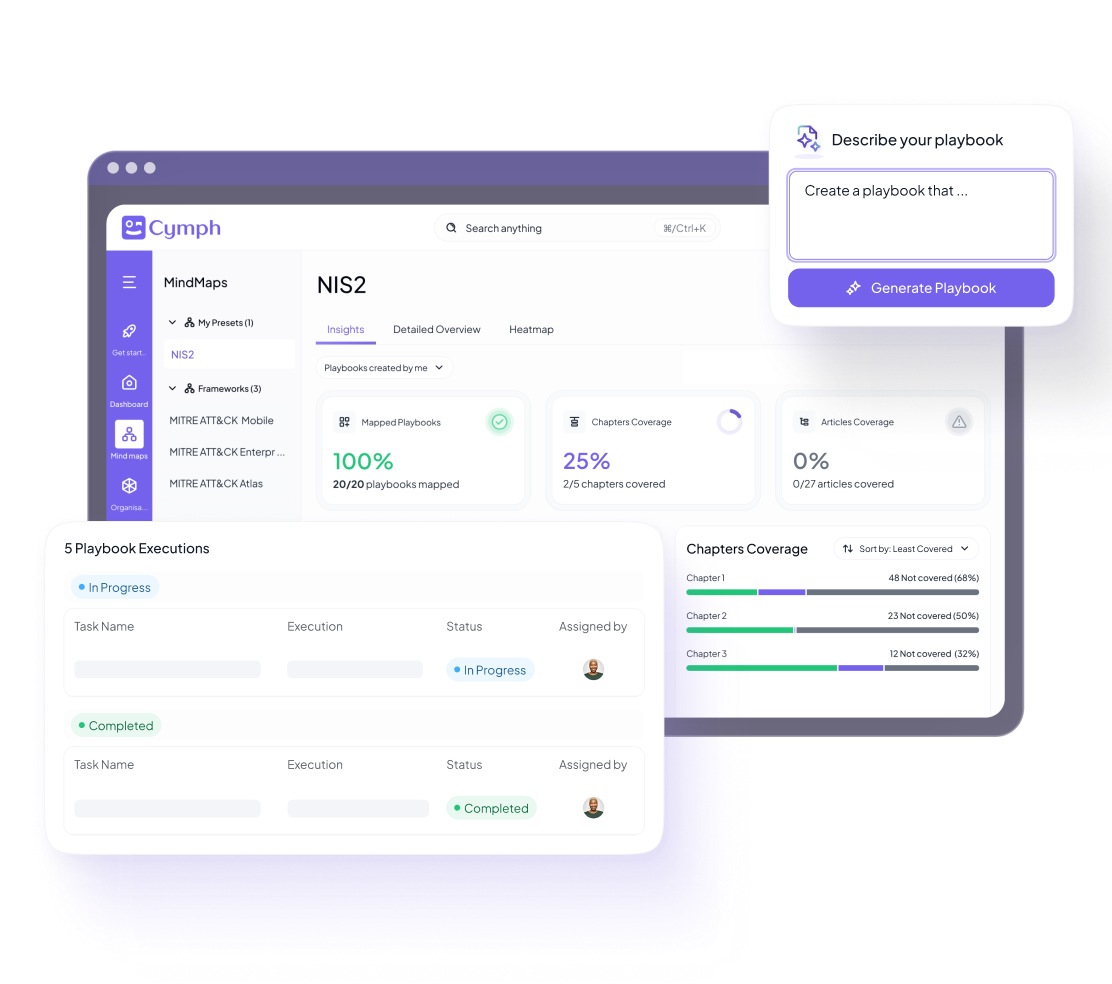
- Bring the context together: playbooks and their governance, assets and their relationships, framework coverage and execution history.
- Keep the context current so Cymph can tell which procedures a change affects.
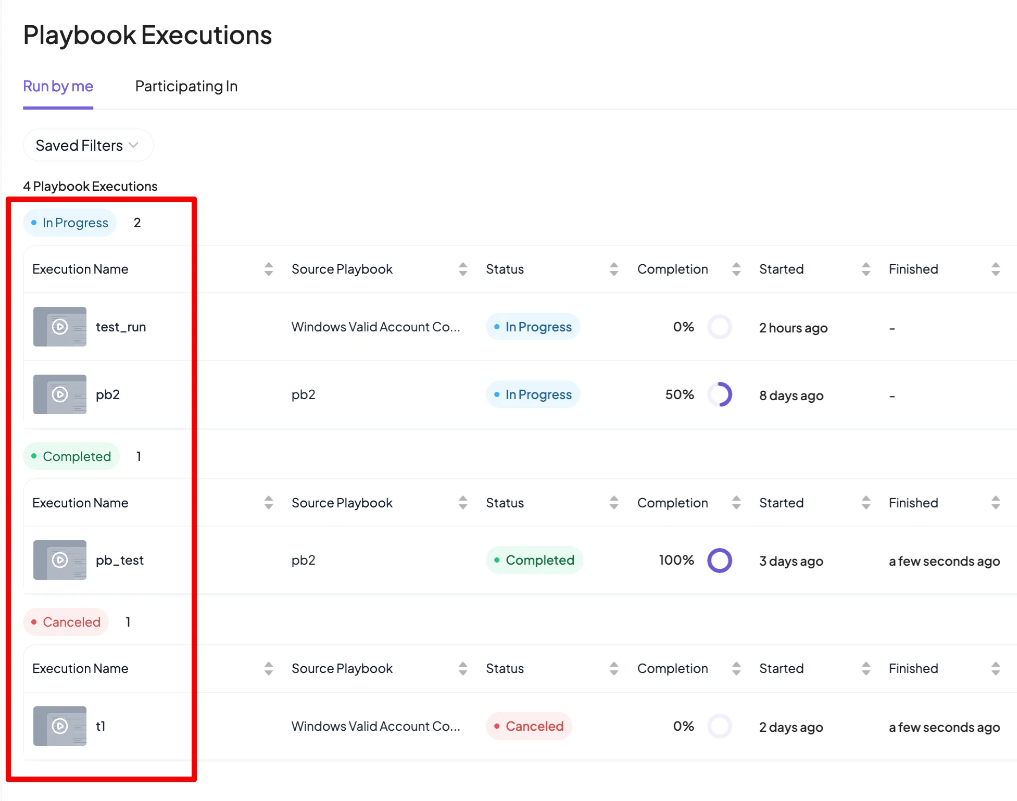
- Learn from executions: timings, deviations and improvements captured during exercises.
- Turn context into targeted changes with Cymph AI, on the specific step that needs to change.
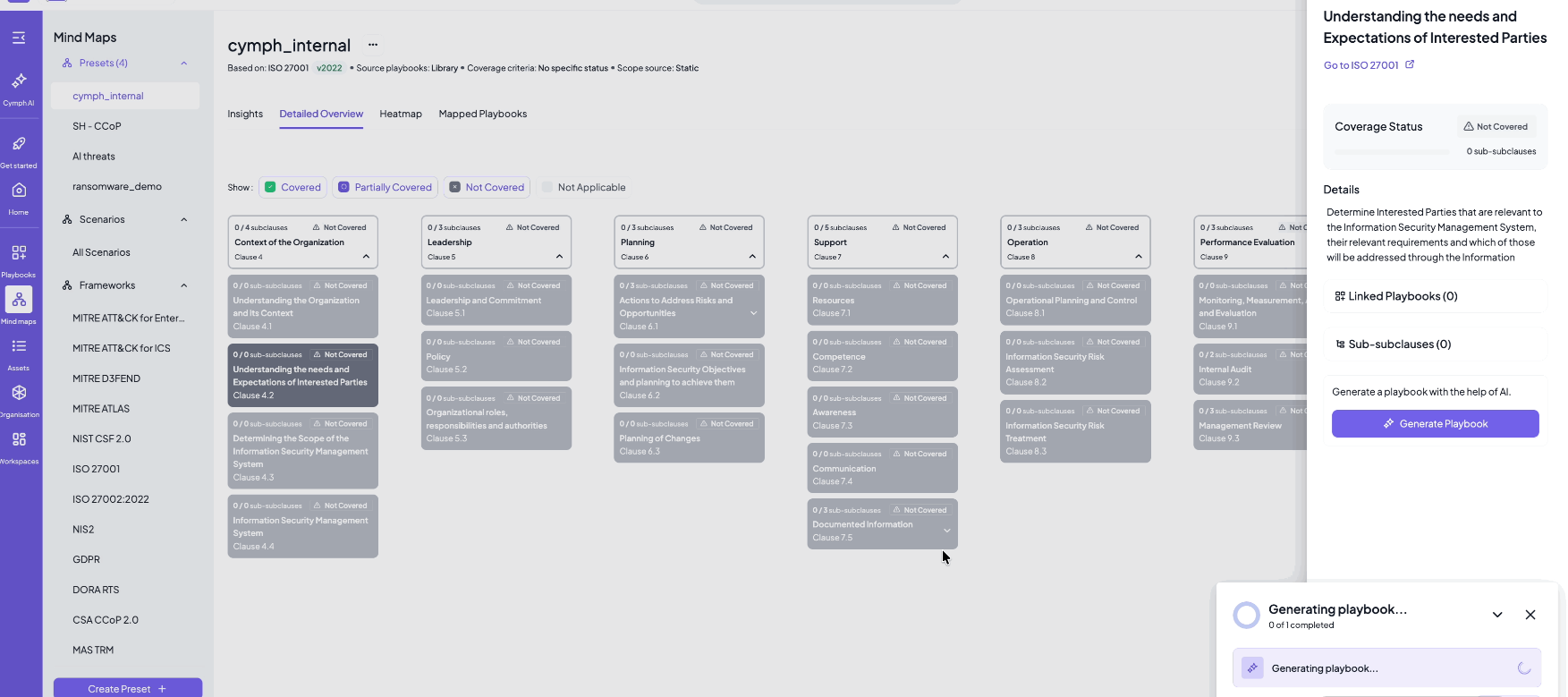
- Create what is missing when the answer is a new playbook rather than an update.
- Keep people in control by reviewing and approving every proposed change before it reaches the playbook.
From manual rework to targeted procedure updates
Cymph uses your organisation’s context to identify affected and missing procedures, then drafts updates and new content for your team to review. Lessons from incidents and exercises feed the next readiness cycle, reducing the effort needed to turn findings into improvements.
| Before Cymph | With Cymph |
|---|---|
| Manually identify affected procedures | Cymph identifies affected playbooks and missing procedures |
| Drafting and updating takes days or weeks | Review, edit or approve proposed content in minutes |
| Lessons disconnected from readiness | Exercises and incidents feed the next readiness cycle |
| Findings scattered across notes, reports and assessments | AI-assisted context ingestion for targeted updates |
Keep your response ready through every change
Every change in your environment updates the context. Every exercise adds what the team learned.
Cymph AI turns both into targeted changes that your team reviews, and the next exercise tests whether they worked. Response readiness stops being a document you wrote once and becomes something that improves with every change and every exercise.