What Does “Incident Response Ready” Actually Mean?
What does incident response readiness mean? Explore six practical dimensions and a simple self-assessment to understand how prepared your organisation is.


Your incident response plan is approved. But if an incident happened this afternoon, would the right people know what to do?
Could they find the relevant procedure, reach the person responsible for a critical decision and follow instructions that match the systems they use today?
These questions get to the heart of incident response readiness. This article explains the concept, explores six practical dimensions and offers a simple way to assess your own organisation’s preparedness.
What is incident response readiness?
In practical terms, incident response readiness is the state of being prepared to detect, respond to and recover from cybersecurity incidents, with the people, processes and technical resources needed to carry out that work.
This is a plain-language description, rather than a formal quotation. NIST’s Incident Response Recommendations and Considerations for Cybersecurity Risk Management places preparation within ongoing cybersecurity risk management, supporting effective detection, response and recovery.
So readiness involves more than documentation. It includes whether people understand their responsibilities, have the access and resources they need, and can work together when an incident occurs.
It also requires evidence. An exercise, a tested recovery process or a verified escalation path gives you a stronger basis for confidence than assuming a documented instruction will work.
Why a plan alone isn’t enough
An incident response plan provides essential direction. It establishes how the organisation intends to manage an incident. Supporting procedures explain how to carry out particular tasks or respond to specific scenarios.
Keeping those instructions useful is an ongoing challenge. People change roles, tools are replaced and new services become business-critical. A procedure that worked six months ago may now reference an unavailable contact or an unfamiliar system.
That can happen even in experienced, well-organised teams. Maintaining response documentation competes with investigations, projects and everyday operational demands.
Consider a procedure that instructs an analyst to isolate an affected server. The instruction may be clear, but practical questions remain: does the analyst have access? Who approves the disruption? What happens if the server supports a critical business service?
Readiness means working through those questions before people have to answer them under pressure.
Six dimensions to help you assess readiness
The following dimensions provide a practical way to organise the discussion. They are an editorial checklist, rather than a formal NIST model or an exhaustive assessment.
1. Coverage: have we prepared for the incidents relevant to us?
Coverage concerns whether your response arrangements address the scenarios that matter to your organisation’s systems, services and risks.
A large procedure library can still leave significant gaps. Equally, you do not need a separate document for every possible variation of an incident. What matters is whether responders have usable guidance for the situations they are likely to face, including escalation when the situation is unfamiliar.
For example, your organisation has a procedure for reporting phishing emails, but no guidance for responding after an employee’s account has been compromised. Reviewing that scenario reveals the need for investigation, containment and recovery instructions.
Another example: Your organisation introduces an AI assistant connected to internal documents. Have you prepared for a prompt injection attack that could manipulate its behaviour or expose sensitive information?
MITRE ATLAS, a knowledge base of adversary tactics and techniques involving AI, can help teams identify relevant scenarios to consider when reviewing their response coverage.
2. Ownership: do people know who decides and who acts?
Ownership includes responsibility for keeping procedures useful and responsibility for taking action during an incident.
Critical decisions need clear authority. Responders also need to know who to contact, when to escalate and who takes over if the primary contact is unavailable.
A response procedure calls for disconnecting a production system. The technical team knows how, but approval is unclear. Naming the decision-maker and their deputy removes a source of delay.
3. Keeping current: do procedures match today’s environment?
A procedure can be complete and still be outdated. Contacts, permissions, tools and dependencies all affect whether its instructions remain usable.
Reviewing procedures after relevant organisational or technical changes helps identify these mismatches. A review date is useful, but it does not by itself establish that the content reflects operational reality.
Let’s say the organisation replaces its endpoint security platform. The containment procedure still refers to the previous product, so the team updates the instructions and checks that responders have the required permissions.
4. Testing: have we checked that the response works?
Testing gives teams an opportunity to discover problems while there is time to address them.
Different exercises answer different questions. A tabletop discussion can explore decisions and coordination. A technical test can establish whether an action, such as restoring a backup, works in practice. A successful discussion alone cannot demonstrate technical recovery capability.
For example, during a tabletop exercise, participants disagree about when to involve the communications team. They clarify the escalation criteria and practise the revised handover in a later exercise.
5. Execution: can people coordinate during an incident?
Execution concerns how the response operates as events unfold. People need access to relevant instructions, visibility into assigned tasks and a way to share updates and record decisions.
It is also useful to consider what happens if normal working tools become unavailable or cannot be trusted.
Let’s imagine a compromised account incident affects the organisation’s usual messaging platform. Responders need an agreed alternative communication channel that they can access without relying on the affected service.
6. Learning: do findings lead to improvements?
An incident review or exercise report creates an opportunity to improve. The practical value comes when findings lead to completed changes.
NIST emphasises continuous improvement and sharing lessons when they are identified, rather than necessarily waiting until recovery has finished.
In a possible scenario, an exercise reveals that an escalation contact is unavailable outside office hours. The team adds an out-of-hours route, assigns someone to maintain it and checks that it works.
A simple readiness self-assessment
Choose one incident scenario relevant to your organisation, such as a compromised account or ransomware affecting a critical service. Ask the people who would be involved:
- Do we have a suitable procedure, and can we find it quickly?
- Is there a clear owner for every critical action and decision?
- Do the instructions match our current people, systems and tools?
- When did we last test the response, and what did that test demonstrate?
- How would we coordinate and record decisions if our usual tools were unavailable?
- What changed after the last incident or exercise, and have we checked that the change worked?
Look for evidence behind each answer: an accessible procedure, a confirmed responsibility, a test record or a completed improvement.
If an answer is uncertain, treat it as a useful finding. Record what needs attention, agree an owner and prioritise it according to its potential effect on the response. This exercise provides a starting point, even without a formal assessment programme.
Readiness needs ongoing attention
Incident response readiness is a current, observable state. Confidence grows when relevant procedures are accessible and goverened, responsibilities are understood and teams have evidence that their response arrangements work.
You can start small. Choose one meaningful scenario, work through it with the people involved and address the gaps you find. Repeat as your organisation changes and your team learns.
How Cymph approaches readiness
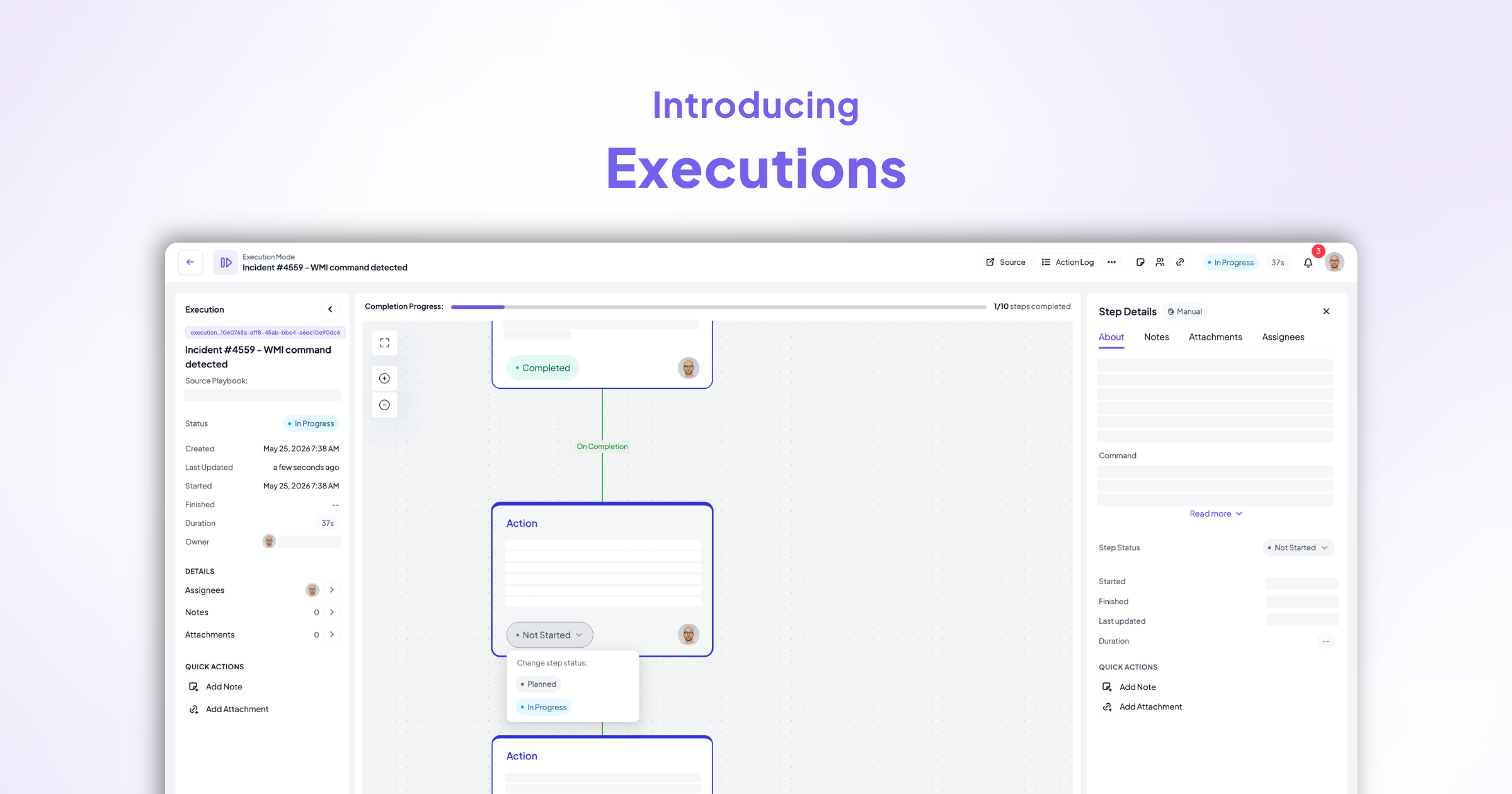
Cymph supports this ongoing work by bringing response procedures, coverage analysis, exercises, governance and incident execution into a connected workspace. Teams can use it to identify gaps, coordinate response activities and inform updates with lessons from previous runs.
To explore how this approach could support your organisation, book a demo or reach out to us.